Easy 2-ingredient Pizza Dough

Recipe

Ingredients:

  • 2 cups self-rising flour
  • 1 cup greek yogurt (I use nonfat, but I hear whole is very yummy)
  • Optional: salt, sugar, garlic powder, italian seasoning

Instructions:

  • Mix the flour and yogurt in a large bowl until well combined.
  • I highly recommend adding about a tablespoon of salt and 2 tablespoons of sugar to help build flavor.
  • Knead until it’s very elastic-y. Cover and let it rest for 10 minutes.
  • When ready to build your pizza, roll out the dough to your desired size and thickness and bake at 450 until golden brown. Enjoy!

Easy Side Dish: Succotash

Recipe

Ingredients:

  • Frozen shelled edamame
  • Frozen sweet corn
  • Red onion, diced
  • Garlic, minced
  • Sesame oil
  • Optional: bacon

Instructions:

  • Heat a large pan on medium to medium high with a few tablespoons of cooking oil. After a few minutes, sautee the garlic and red onion until almost translucent. 
  • Add in frozen edamame and frozen corn. Cover with a lid to let the steam cook the edamame and corn through.
  • After a couple minutes, remove the lid and season with salt and pepper. Before serving, drizzle in sesame oil to taste. Enjoy!
  • Optional: if adding bacon, cut the bacon into small pieces and crisp in the pan first. Once it’s crispy, remove and set aside. Do not drain the fat, just use it to cook the onions and garlic in lieu of oil. Add in the bacon pieces at the end.

Creamed Corn Egg Drop Soup

Recipe

You will need:

  • 1 can of creamed corn
  • 2 eggs, beaten
  • Sesame oil
  • White pepper
  • Salt
  • Chicken stock (or chicken stock powder and water)

Instructions:

  1. Add creamed corn to a pot and bring to a simmer.
  2. Before tossing the can, use it as a measuring cup and add one can of water or chicken stock to the pot with creamed corn. If using water, add 1 tablespoon of chicken stock powder.
  3. Increase heat to medium/medium-high and as the soup starts bubbling, slowly stream in the beaten egg on top of the areas where you see a bubbling (stream in a spoon’s worth at a time, not the whole amount) and stir to incorporate the eggs. This is how egg drop soup is made.
  4. Once you have added all the egg, season with salt to taste.
  5. When ready to serve, drizzle sesame oil on top and sprinkle on some white pepper.
  6. Enjoy!

Cold Sesame Noodles

Recipe

You will need:

  • 1 serving of cooked, drained noodles that have been rinsed with cold water (here is a brand/type that we would use)
    • Alternate: ramen noodles! Just don’t add the seasoning packets.

Sauce:

  • 1 tablespoon of the following:
    • soy sauce
    • peanut butter
    • sesame oil
  • 2 tablespoons of white vinegar
  • 1/2 tablespoon of chili garlic sauce/something spicy like sriracha
  • 1/2 garlic clove, grated
  • 1/2 tablespoon white sugar
  • Optional: toasted sesame seeds

Optional: 1-2 tablespoons of chili crisp (this is chili flakes fried in oil, but a brand that isn’t spicy. mainly just adds flavor)

Mix sauce while noodles are cooking, then once they’re drained and cold, toss together noodles and sauce. Garnish with chopped cilantro and scallion to taste. Enjoy.

Tips:

  • This recipe is very easy to scale up or down and is very forgiving.
  • You can store this overnight, but depending on the noodle, it may soak up a lot of the sauce so you may need to make more to dress it with before serving.
  • You can technically eat this warm, but I would suggest not eating it hot- the cooler temperature allows you to fully taste all of the lovely flavors.
  • I think shrimp goes really well with these, but you can add any kind of meat you’d prefer.

How to Make Homemade Greek Yogurt

Recipe

You will need:

  • Your preferred type of cow’s milk (we use fat free milk for fat free yogurt)
    • The amount of milk doesn’t particularly matter- I used to use a half gallon, now I use a full gallon.
  • A large pot
  • 1/4 cup starter yogurt (look for live cultures- we use Fage)
  • A thermometer
  • Cheese cloth

Instructions:

  • Heat up your milk in your large pot on the stove on medium until it reaches 180 degrees Fahrenheit. Stir constantly with a rubber spatula to make sure it doesn’t scald on the bottom. If it does scald, you will be fine- I’ve scalded the bottom of my pot at least 75% of the time when I make yogurt.
  • Once it reached 180 degrees, turn off the heat but keep the pot on the stove and continue to stir for around 5 minutes.
  • Take the pot off the stove and let it cool until it reaches 100 – 120 degrees Fahrenheit.
  • While your milk cools, leave out your starter yogurt to come up to room temperature.
  • Once your milk reaches target temperature, whisk in your starter yogurt and make sure there are no clumps. If you scalded the bottom, try not to whisk up any burnt bits.
  • Cover your pot and leave in your oven (turned OFF) with the oven light on for 8-16 hours. We usually let it incubate for around 12. The longer you let it sit, the more tart it will become. Fun fact: if you let it sit for 24 hours, there will no longer be any lactose! The cultures will have eaten it all up.
  • Strain your yogurt into a colander lined with cheesecloth set over a large bowl to catch the whey. You can strain it as long as you want, depending on how thick you like your yogurt. If it gets very very “dry,” you can always incorporate some whey back in.
  • Refrigerate and enjoy. Always remember to save at least a tablespoon or two to make your next batch!

Bonus tips:

  • If you’re going to make yogurt regularly, I really recommend a specific yogurt straining bag. I’ve ordered this one and am SO excited for when it comes in.
  • The liquid that you strain out of the yogurt is whey- this can be used in a lot of ways, but so far, we have only used it to make jello (from a box). Usually we just pour it down the drain….

Let me know if you make yogurt! Instagram: @hang__tran (two underscores)

Chicken and Cabbage Dumplings

Recipe

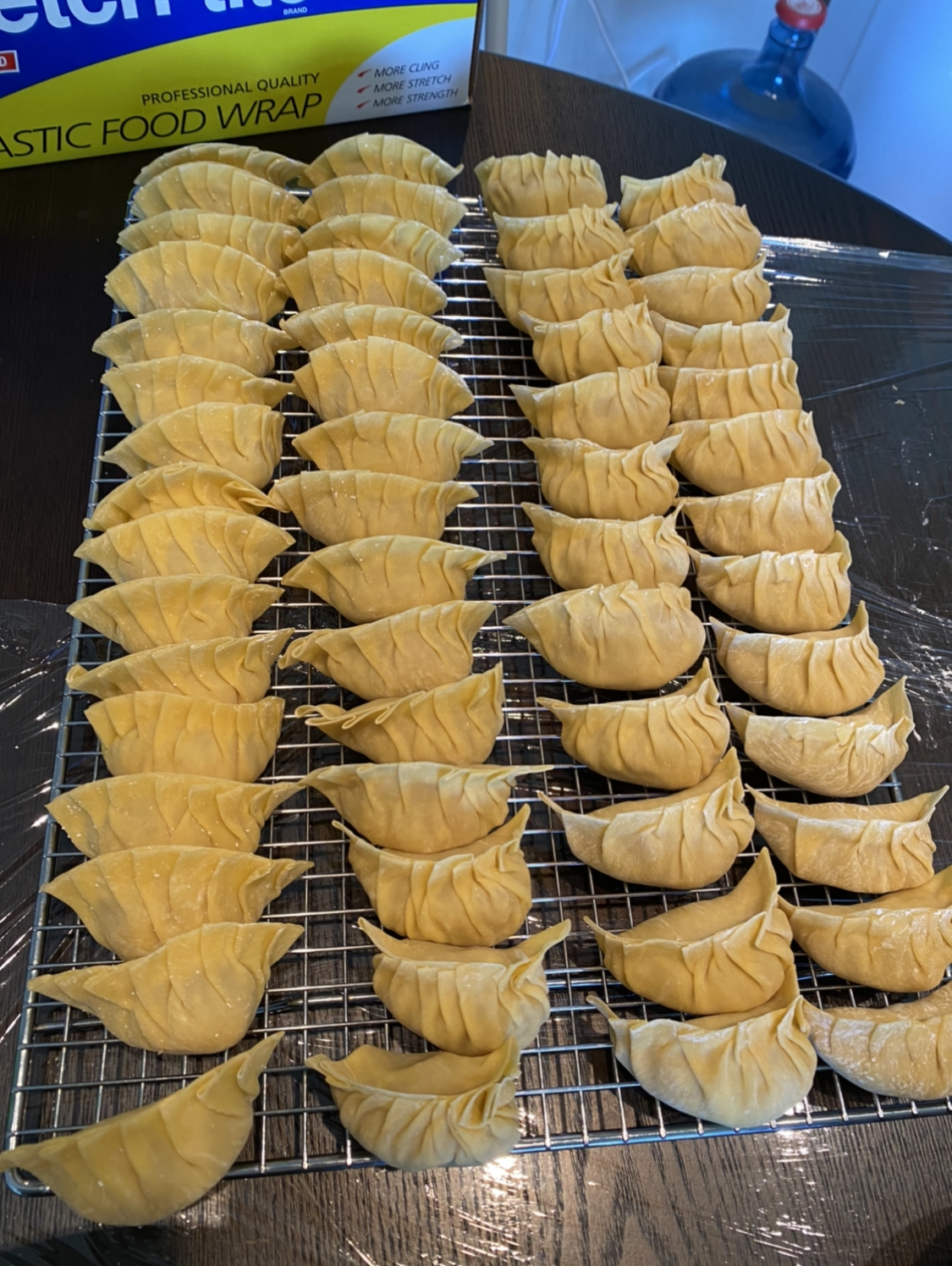
IMG_4347

Filling:

  • 3 lb ground chicken
  • 1.5 lb cabbage, cut into manageable pieces (fist sized)
  • 2 tablespoon salt
  • 1 onion
  • 4 cloves garlic
  • 2 teaspoon sesame oil
  • 2 Tablespoon soy sauce
  • 2 tablespoon sugar
  • 1-2 teaspoon white pepper

Wrappers

  • We usually purchase pre-made wrappers from our local Asian grocery store. See here.

Special Equipment:

  • Food processor
    • If you don’t have a food processor, you can use a blender or a cheese grater as a last resort

Instructions:

  • In batches (how many will depend on the size of your food processor), throw your cabbage chunks, onion, and garlic into the food processor equipped with the standard metal blade and process until everything is well minced/homogenous small pieces. Add to the large mixing bowl. If you don’t own a food processor or a blender, you can use a cheese grater to quickly mince the cabbage and then mince the onion and garlic by hand.
  • Add ground chicken, soy sauce, salt, sugar, sesame oil, and white pepper into the bowl.
  • Mix very well- we usually use a food-safe glove and get in there with our hand(s).

Assembly:

  • Set up your station (for us, that’s our dining table) with your wrappers, filling, spoons, a tray to set the wrapped dumplings on, and small bowls of water- you will need water to seal the dumplings.
  • There’s no better way to learn how to wrap dumplings than to watch videos- here’s a simple, easy to follow one to start your rabbit hole of dumpling folds and shapes.

Tips:

  • Start with a large teaspoon of filling to make sure you have enough wrapper room to learn how to fold. You can gradually increase the amount of filling as you get more comfortable.
  • Err towards more water than less when wetting the edge of the wrapper to make sure your dumplings are sealed.

Cooking:

  • My preferred method is by boiling them; it’s hands off, easy, ensures they are cooked, and less oil overall if you know you’re going to consume more than a handful.
    • Bring a pot of water to boil, toss in your dumplings, then cook until they start to float, then wait an additional 3-5 minutes before taking them out. I always take one out first and cut it open to make sure the filling is cooked.
  • Pan fry:
    • Heat up oil in a saucepan on medium- low for a few minutes. Add your dumplings and cover with a lid for 3-4 minutes. Once they have a nice crust on the bottoms, carefully add in hot water and quickly put the lid back on to let them steam up and finish cooking. This is a tricker process and requires a lot of instinct since cooking times will vary depending on your pan, stove, and dumplings, so I recommend this method to people who are already familiar with pan frying dumplings.
  • Steam:
    • Set up your steamer arrangement and steam for 8-10 minutes. As always, check one dumpling first to make sure it’s cooked.

Storing:

You’ve probably noticed this recipe calls for a substantial amount of ingredients- that’s because we’ve found that this amount of filling can fill just about one entire pack of wrappers so that we’re not in the sticky situation of either too many wrappers or too much filling.

Since this proportion can easily make two full sheet trays of dumplings, we usually freeze them and keep them frozen until we want to eat them.

To do that, we place our wrapped dumplings (still uncooked) on a wire rack set on a baking sheet. Once the sheet is full of dumplings (make sure they’re not too crowded or touching each other too much), we place the entire tray in the freezer and let the dumplings freeze. After an hour, they are usually hard and dry enough to be placed into a plastic bag for storing. Then, when we want to eat them, we take them straight from the freezer and (usually) straight into a pot of boiling water.

If you do not freeze them individually first before putting them into a bag or container, the moisture from the wrappers will come out and make things very weird, sticky, and gooey before all the dumplings will just stick together in one giant frozen clump. If you cook this giant clump, you will likely rip off a lot of pieces of wrapper and the filling will probably start leaking.

Dipping Sauce (recipe courtesy of Eric’s dad):

  • 2 parts sugar
  • 2 parts cooking wine (we use a white chinese cooking wine)
  • 2 parts oyster sauce
  • 4 parts white vinegar
  • 4 parts soy sauce
  • Minced garlic
  • Black pepper
  • Thinly sliced green onion
  • Splash of sesame oil

(Parts = unit, which could be a tablespoon or a 1/4 cup or a full 1 cup depending on how much sauce you want to make)

Enjoy! Send me your dumpling photos on Instagram: @hang__tran (two underscores)

Hang’s Kitchen: Fail-Proof Phở

Recipe

This is a recipe for beef phở that is made in an Instant Pot or pressure cooker. Phở (pronounced fuh, not foe) is a staple Vietnamese dish that is commonly known for its aromatic broth, thin rice noodles, and assorted vegetables and meat. There are many components of making this dish, so I am going to get right into the recipe and then talk about the process below.

This recipe is for 8 quarts of broth, which serves about 5-6 medium bowls. Serving size varies for each individual. Some people prefer less broth, more noodles, some prefer vice versa.

Hang’s Fail-Proof Phở

For the broth:

  • 1 lb cut beef bones
  • Oxtails (optional, but can be used to complement beef bones and add deeper flavor)
  • 1 lb boneless chuck roast
  • 2 yellow onions
  • 1 ginger root, approximately 5 inches long
  • 1 1/2 pieces of star anise
  • 1 TB black peppercorns
  • 3-4 whole cloves
  • 2 cardamom pods, crushed
  • 2 cinnamon sticks

For the toppings:

  • Pho noodles (probably frozen)
  • Very thinly sliced ribeye or london broil cut beef
  • 1 yellow onion
  • Chopped green onion
  • Chopped cilantro
  • Thai basil leaves
  • Bean sprouts
  • Sriracha
  • Hoisin Sauce
  • Limes

Instructions:

For the broth:

Halve the onions and ginger and broil in the oven cut-side up until fragrant and slightly charred, around 10 minutes. Set aside.

Place the beef bones (and oxtail if you are using) into a deep soup pot and cover with cold water. Bring to a boil and simmer for 10 minutes to cleanse the bones of scum, which will rise to the top of the water as foam. Drain, rinse, and drain again. Place bones onto a foil-lined baking sheet and broil for 5 minutes, then flip and broil other side for 5 minutes.

On the stove in a pan, toast the spices (cinnamon, star anise, cloves, black peppercorns, cardamom) on medium heat until fragrant.

Combine everything you just prepared into the pressure cooker and fill with cold water. In addition, add the raw chuck roast beef. You can cut this into smaller pieces to make space, but no smaller than 2″ x 2″ cubes.

Broth checklist:

  • Beef bones
  • Oxtails (optional)
  • 2 yellow onions
  • 1 ginger root
  • star anise
  • cinnamon
  • cardamom pods
  • black peppercorns
  • cloves
  • 8 quarts of water (I prefer to use filtered or bottled water just to have a super clean broth)

Now what?

On my pressure cooker, I use the soup setting on high/well-done. This cooks at a high pressure for 1 hour. After the hour is up, I remove the chuck beef (which is well cooked at this point) and then cook again for another hour. This can vary depending on your cooker, but mainly just cook the crap out of it at a high pressure for 1.5 – 2 hours.

Once the broth is done, carefully open the pressure cooker (following the release instructions) and then filter it into a soup broth. I recommend using a mesh strainer lined with cheesecloth that is placed across the soup pot to get an ultra clear broth. Discard the spices, onion, and ginger, but reserve the beef bones. This is kinda optional, but you can pick at the tendon and meat on the bones. This is personally my favorite part. I love the scrap meat.

Time to season the broth! My mom told me to use chicken bouillon powder, sugar, and salt. So that’s what I do! This is up to taste, but I recommend to not use more than 2 TB of sugar and 2 TB of chicken bouillon powder.

Now that the broth is done, you need to get the toppings ready.

Place the frozen pho noodles into cold water to thaw and allow the noodles to separate. Once thawed, grab desired amount and place into bowl. Cover the bowl with a damp paper towel and microwave for 1 minute. Do this for each serving.

Take the reserved cooked chuck beef (it should be cooled by now) and thinly slice against the grain. Set aside.

In each bowl, on top of the steamed noodles, add the following (amount is up to personal taste):

  • thin slices of raw ribeye or london broil
  • thin slices of cooked chuck
  • tendon/scrap meat from bones (optional)
  • chopped green onion
  • chopped cilantro
  • thin slices of yellow onion

Bring the broth to a rolling boil (and then turn off heat) and then immediately ladle into bowls, which will gently cook the raw meat and finish cooking the noodles.

At the dinner table, leave out Thai basil, limes, bean sprouts, hoisin sauce, and sriracha. These are for the people eating to pick and add to their bowls according to their preference.

Enjoy!

img_8086